
TLDR
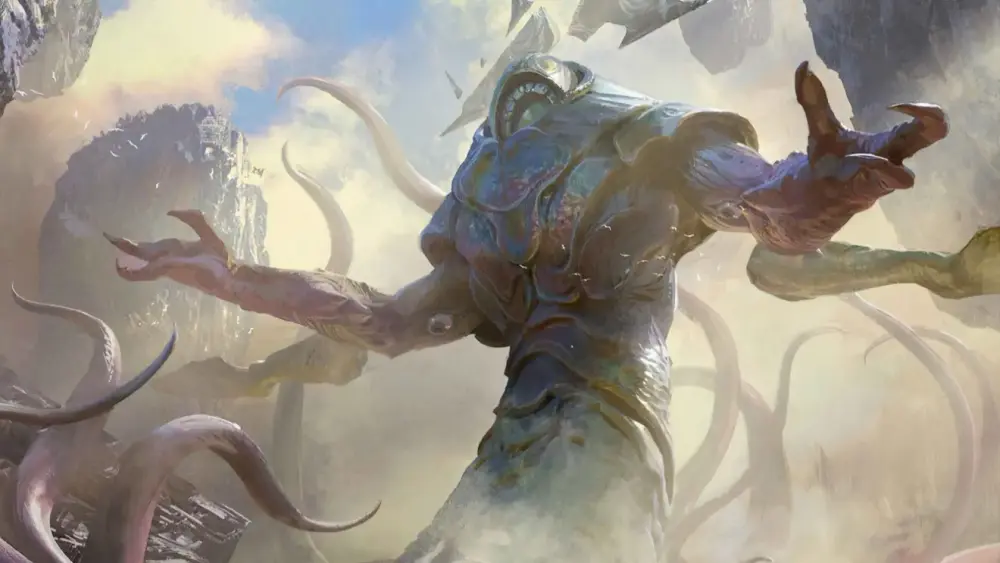
Eldrazi in MTG are reality-eating, plane-warping cosmic predators that show up as titans plus swarms of lesser horrors.
Lore-wise, they were imprisoned on Zendikar, unleashed (whoops), and later two titans were destroyed while Emrakul ended up sealed in Innistrad’s moon.
Gameplay-wise, Eldrazi tend to be big colorless threats with cast triggers, Spawn/Scion ramp, and sometimes Annihilator (aka “everyone stops having fun at once”).
Modern Horizons 3 gave Eldrazi a fresh wave of cards, including new titan versions and a dedicated Commander deck.
If you proxy Eldrazi for casual play, do the polite thing: clear communication, readable prints, consistent sleeves. Tournaments are a different universe.
The Eldrazi in MTG, the short version
Eldrazi in MTG are what happens when the Multiverse forgets to install basic safety rails. They are ancient beings from the spaces between planes, and when they “arrive,” they do not stroll in like normal villains. They manifest as world-sized titans and a brood of lesser Eldrazi that distort biology, physics, and your board state.
If you’ve ever looked at a card and thought, “This creature is 10 mana and still somehow feels rude,” congratulations. You have met the Eldrazi design philosophy.
What are the Eldrazi, really?
In the story, the Eldrazi are often treated like cosmic forces more than characters with relatable motivations. Their “goal” is closer to feeding than conquering. Planes they reach get drained of mana and life, and what’s left is… not a great vacation destination.
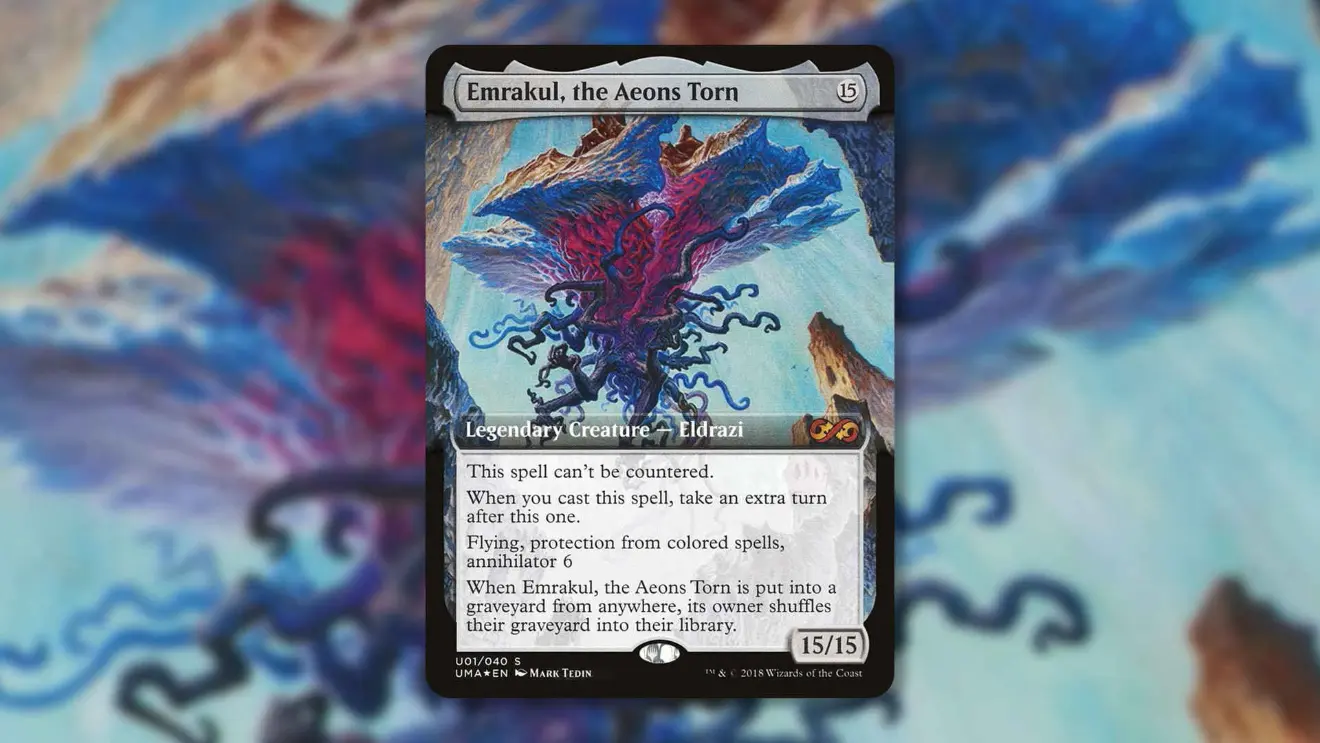
When they manifest physically, the big three titans define the vibe:
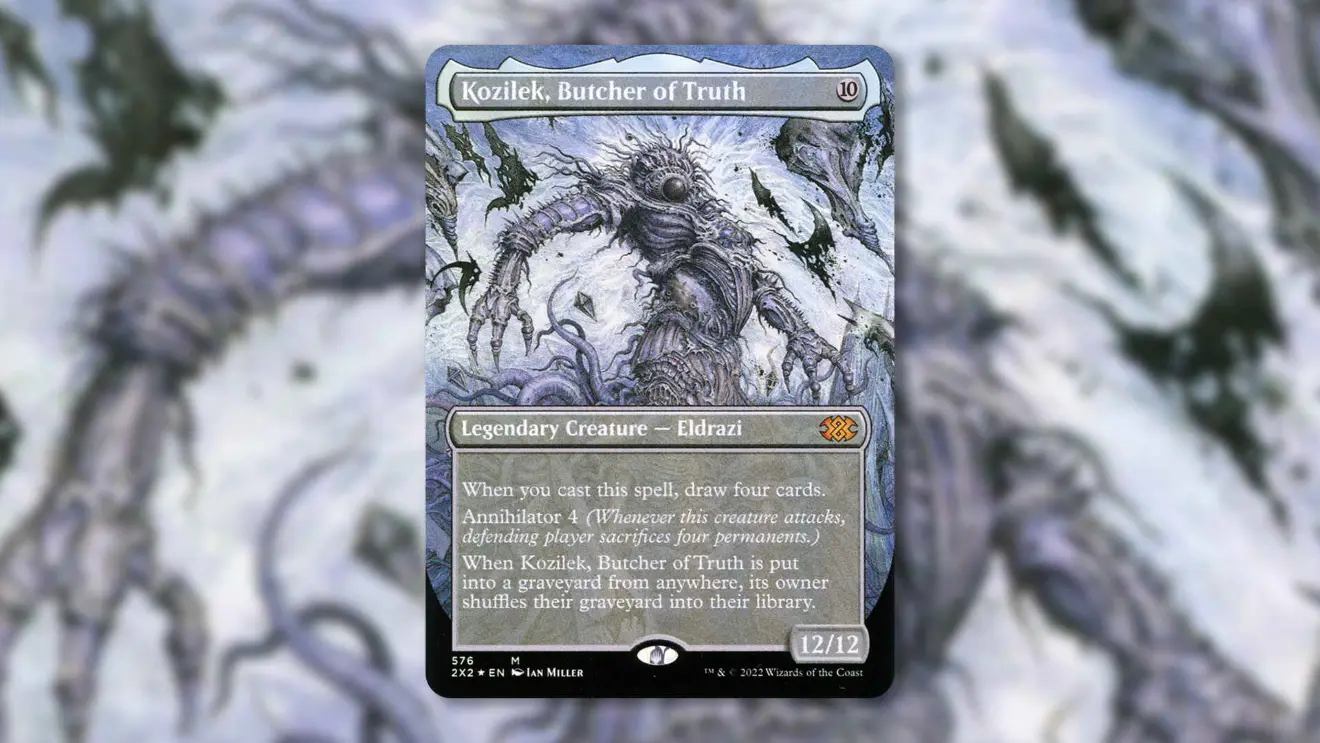
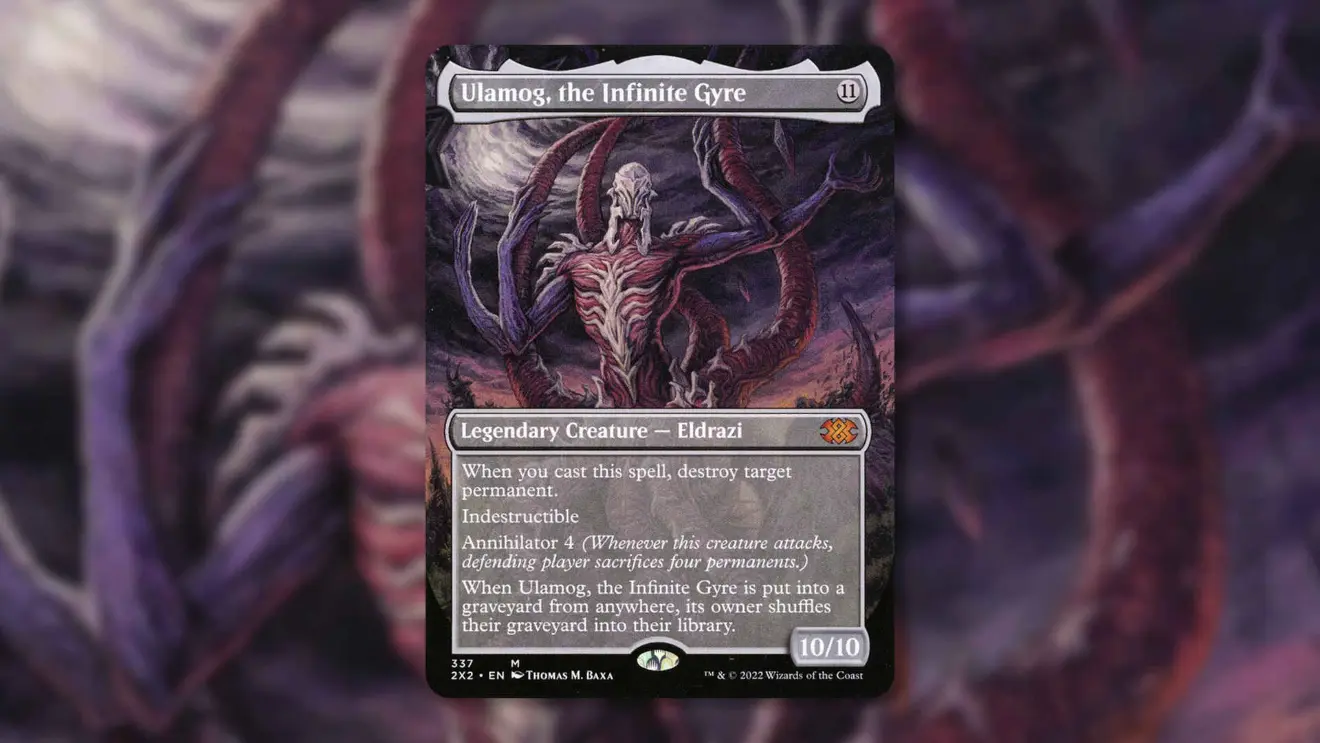
Ulamog: consumption and annihilation, the “everything turns to dust” nightmare.
Kozilek: distortion and warped perception, the “your senses are now unreliable” nightmare.
Emrakul: mutation and transformation, the “your body is now a group project” nightmare.
A quick Eldrazi timeline, from Zendikar to now
Eldrazi lore is sprawling, but the major beats are pretty clean once you line them up:
1) The prison on Zendikar
Long before modern story events, Nahiri, Sorin Markov, and Ugin set up an Eldrazi trap on Zendikar, using the plane’s hedrons and leylines to bind the titans. It worked for a long time, in the way that a thousand-year-old padlock technically works until someone hits it with a crowbar.
2) The Eye of Ugin gets “accidentally” compromised
A chain of events pulls planeswalkers into the Eye of Ugin, and the prison gets damaged. This is the part of the story where the universe gently reminds everyone that poking ancient mystical machinery is not a hobby.
3) Nissa breaks the lock
Later, Nissa Revane makes a desperate call: release the Eldrazi so they’ll leave Zendikar. It does not work. Zendikar does not get a polite “thanks for freeing us, we’re off to go be someone else’s problem.” Zendikar gets eaten.
4) The Gatewatch fights back, and two titans fall
The Gatewatch rallies on Zendikar and eventually manages to fully anchor Ulamog and Kozilek to the plane’s leylines and destroy them. That moment is a big lore turning point, and also the moment many Commander pods collectively decided, “We should probably run more removal.”
5) Emrakul goes to Innistrad, then into the moon
Emrakul’s arc is the most unsettling. She spreads mutations and madness across Innistrad, and then ends up sealed in Innistrad’s moon. Importantly, later story material still treats her as present and dormant inside the moon, not “gone forever.”
6) Modern Horizons 3 brings Eldrazi back into the spotlight
Modern Horizons 3 revisits Eldrazi with new takes and new high-end threats, plus a dedicated Eldrazi Commander deck. If you’ve been waiting for fresh tentacles, Wizards did not make you wait.
Why Eldrazi feel so different in gameplay
Most creature types in MTG have a “fair” mode. Goblins swarm, Elves ramp, Zombies recur, Humans do suspiciously efficient things for two mana.
Eldrazi, by contrast, are built around:
Cast triggers: you get paid for successfully casting the big spell, even if it gets answered later.
Colorless scaling: a lot of Eldrazi shells don’t care what colors you are, which means they can show up anywhere.
Token-based ramp: Spawn and Scions turn into colorless mana, letting you climb from “doing nothing” to “casting a titan” faster than your opponents prefer.
Annihilator (sometimes): the classic “attack trigger, sacrifice permanents” mechanic that ends games by removing the concept of having a board.
Annihilator, in plain English
Annihilator is a triggered ability that happens when the creature attacks. It does not wait for combat damage. It does not care if the attacker gets blocked. When it resolves, the defending player sacrifices N permanents.
If your table is casual and someone drops annihilator-heavy Eldrazi, it’s worth having a quick Rule 0 chat. Not because it’s “wrong,” but because it’s the kind of effect that can turn a four-player game into a three-player game where one person watches.
The Eldrazi titans, old and new
Here’s the practical rundown of the marquee titans you’ll see most often.
Classic era titans
Ulamog, the Ceaseless Hunger: a brutal cast trigger plus an attack trigger that pressures libraries and boards.
Kozilek, the Great Distortion: refills your hand and turns spare cards into counterspells.
Emrakul, the Aeons Torn: iconic, absurd, and notably banned in Commander. (This fact saves a lot of arguments.)
Emrakul, the Promised End: the “I’ll take your next turn” Eldrazi, which is exactly as social as it sounds.
Modern Horizons 3 titan versions
Modern Horizons 3 added flashy new top-end Eldrazi, including:
Emrakul, the World Anew
Kozilek, the Broken Reality
Ulamog, the Defiler
These cards lean into the modern Eldrazi identity: huge effects that happen on cast, plus unique layers of protection or inevitability.
Best Eldrazi cards, by what you’re trying to do
Rather than one giant list, here are the Eldrazi hits by role. Think “what problem does this solve,” not “what’s the biggest number.”
1) Big finishers (the table-ender tier)
Ulamog variants that exile permanents or half libraries
Emrakul variants that steal turns or take control of creatures
Kozilek variants that refill your hand and protect your threats
These are your “if this resolves, the game pivots” cards.
2) The engine pieces (how Eldrazi actually happen)
Eldrazi Temple and Eye of Ugin style effects that reduce costs or boost mana
Spawn/Scion generators (especially the ones that trigger off casting colorless spells)
Forsaken Monument type payoffs (mana doubling, life buffer, scaling threats)
These are the cards that turn “I’m playing fair Magic” into “I’m playing 12-mana Magic.”
3) The mid-game bruisers (where games are really won)
Thought-Knot Seer and Reality Smasher style pressure cards (format dependent)
Value Eldrazi that generate bodies, exile cards, or provide pseudo-removal
Interaction tools that happen to be colorless-friendly
This is the layer that stops your deck from being “ramp, ramp, ramp, die.”
4) Commander-specific glue (because 99 cards is a lot)
Zhulodok, Void Gorger: turns your big spells into double cascade fireworks.
Ulalek, Fused Atrocity: supports a broader Eldrazi identity and rewards chaining spells and abilities.
Board resets like All Is Dust that punish colored boards and let colorless decks catch up.
How to build Eldrazi without getting run over
If you only remember one thing: you do not lose with Eldrazi because your 10-drop was weak. You lose because you died on turn 6 holding a fistful of dreams.
Here’s the practical checklist:
Start with survival, not spice
Run enough early interaction or board control to avoid getting snowballed. Eldrazi decks that “only ramp” are basically asking three opponents to do math together.
Treat your ramp like a curve
Mix ramp that works at 2, 3, and 4 mana, not just “big rock tribal.” Spawn and Scions help smooth this, and they also give you bodies for blocking.
Plan for the social contract
If you’re playing annihilator-heavy threats or extra-turn-adjacent Eldrazi effects, set expectations early. You can still play them. You just don’t want the table finding out mid-combat.
Playing Eldrazi with proxies, the sane way
Eldrazi decks get expensive fast, mostly because a lot of the best colorless staples are also the best staples for any deck that wants to do ridiculous things with mana.
If you proxy for casual play:
Keep cards readable at a glance (especially board wipes and commanders).
Use consistent sleeves/backs so nobody is dealing with accidental marked cards.
Tell the table you’re on proxies and what your intent is (playtesting, budget, accessibility).
Remember: sanctioned events generally require authentic cards, with only limited judge-issued proxy exceptions in specific situations. If it’s a tournament, assume “real cards” unless the organizer says otherwise.
And yes, this is the part where I remind you: a proxy is a play piece. A counterfeit is fraud. Don’t be that person.
Final thoughts
Eldrazi in MTG are popular because they do two things at once: they feel mythic in the story, and they play mythic on the table. The titans are memorable, the mechanics are distinct, and the decks tend to create those “either I stop this right now or I’m dead” moments that Commander players secretly love complaining about.
Just build them with a little humility. You’re piloting cosmic horrors, not filing taxes. Nobody wants a three-hour game that ends with “annihilator 6, good luck.”
FAQs
Are Eldrazi “evil” in MTG lore?
They’re closer to a natural disaster than a mustache-twirling villain. They consume worlds the way a wildfire consumes a forest. That’s still bad for everyone living there, but “evil” implies they care.
Are Eldrazi colorless even when they have colored mana symbols?
Some Eldrazi are mechanically colorless via abilities like Devoid, but color identity rules (especially in Commander) can still care about colored mana symbols. Always check the specific card and the format rules.
Is Emrakul, the Aeons Torn legal in Commander?
No. It’s on the Commander banned list.
What’s the difference between Eldrazi Spawn and Eldrazi Scions?
Both can be sacrificed for colorless mana. Spawn are typically 0/1, Scions are typically 1/1. Functionally, Scions are slightly better bodies.
Did Ulamog and Kozilek really die in the story?
Their physical forms were destroyed on Zendikar after being fully anchored to the plane’s leylines. Emrakul is the titan most explicitly “still around,” sealed in Innistrad’s moon.
What’s the easiest Eldrazi Commander to start with?
A colorless commander like Zhulodok is straightforward if you like big spell chains. If you want access to more tools and colors, Ulalek-style builds open up more options.