
TLDR
A Magic: The Gathering artist proof is a white-backed version of a card given to the artist who created the artwork. The usual process is simple: identify the exact card printing, find the original artist, check the artist’s store or social pages, then buy the proof directly or through an authorized seller.
Artist proofs are collectibles. They are not tournament-legal play copies, and they are not something a proxy printer can officially create. If you want a playable card for casual Commander, cube, or testing, PrintMTG is a better fit. If you want the real artist proof, go to the artist first.
Artist Proofs Are Small Pieces Of Magic History
A Magic: The Gathering artist proof feels different from a normal card the second you turn it over. The front looks like the card you know. The back is blank white. That empty space is the point.
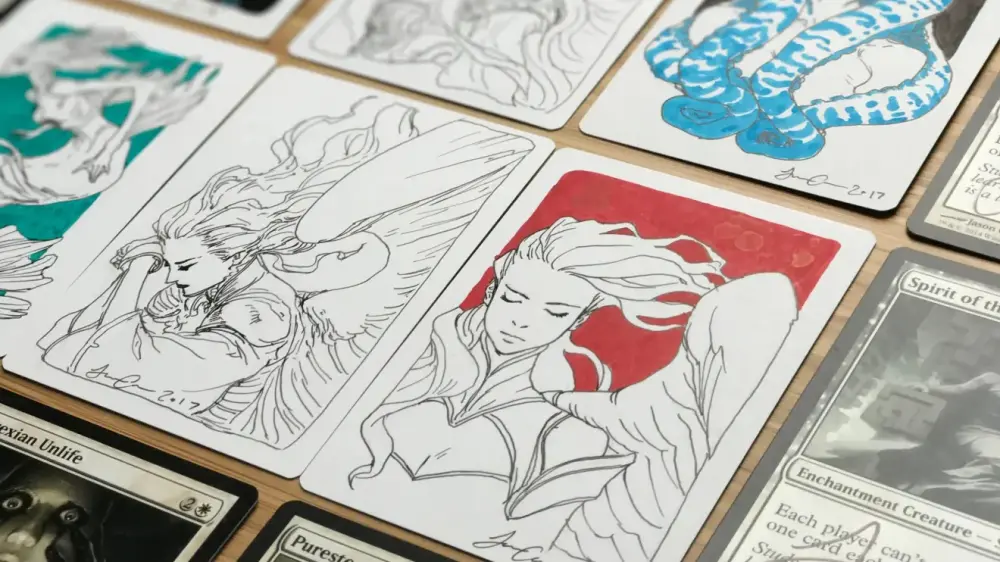
Collectors use that blank back for signatures, sketches, small paintings, notes, and one-of-a-kind commissions from the original artist. For some players, the card itself matters. For others, the real draw is owning something that connects the printed game piece to the person who made the art.
That is why the process matters. A Magic: The Gathering artist proof is not just “a rare version” you add to cart anywhere. In most cases, the best path is direct: find the artist, see what they still have, and buy from them or their trusted representative.
And if your actual goal is to play the card, not collect the proof, that is a different lane. PrintMTG can help with clean, readable MTG proxies and custom Magic-style cards for casual games, deck testing, cube, and Commander. But an official artist proof comes from the original artist side of the hobby.
What Is A Magic: The Gathering Artist Proof?
An artist proof is a special white-backed version of a Magic card that is given to the artist after their artwork appears on a published card. The front of the proof looks like the printed card. The back is unprinted.
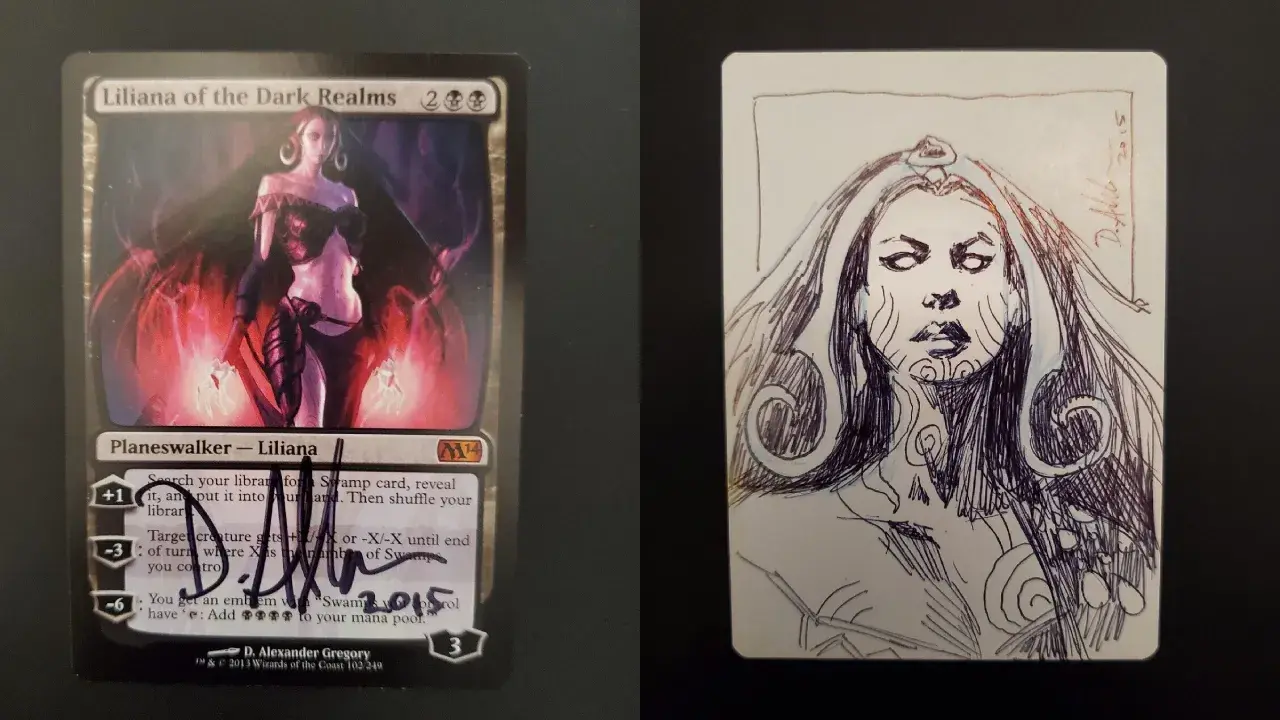
That blank back creates the whole collector category. Some artist proofs stay blank. Some get signed. Some get a pencil sketch. Some get a full color painting that turns the proof into a miniature original artwork.
Artist proofs are limited. Modern numbers are commonly discussed as 50 non-foil artist proofs and 30 foil artist proofs per qualifying printing, though older cards, special products, language variants, and unusual releases can vary. That is why old artist proofs can be hard to find. Once the artist sells through their copies, there usually is not another direct batch waiting.
Artist proofs are also not normal play cards. Because they do not have the standard Magic card back, they are generally treated as collectibles rather than tournament-legal cards. Some people sleeve them for casual games with permission, but that is a table decision, not a sanctioned-event rule.
Step 1: Identify The Exact Card And Printing
Start with the card itself.
Do not just search “Sol Ring artist proof” or “Lightning Bolt artist proof” and assume every result is the same. Many famous Magic cards have several artworks across different sets, promos, Secret Lairs, showcase frames, Commander products, and reprint sets. A different artwork usually means a different artist, and that means a different artist proof.
Check these details before you contact anyone:
Card name
Set name
Collector number
Foil or non-foil version
Artist name
Special frame or promo treatment
Language, if relevant
Scryfall is usually the easiest way to confirm this. Search the card name, open “all prints,” and look at the exact version you want. Gatherer, Wizards’ official card database, is also useful for checking official card details.
The artist credit is usually printed at the bottom of the card. On modern cards, it is easy to miss because the footer is packed with collector info. Slow down and check the exact art credit. Buying from the wrong artist is the most common beginner mistake.
Step 2: Find The Artist’s Official Sales Channel
Once you know the artist, look for their official store or preferred contact method.
Many Magic artists sell artist proofs through their own websites. Some use Shopify stores. Some use Etsy. Some post availability on Instagram, Facebook, Bluesky, X, or Discord. Some work through an agent or an art-market group. Some do not sell online at all and bring their proofs to MagicCon or other events.
A good search pattern looks like this:
“[Artist Name] MTG artist proofs”
“[Artist Name] Magic artist proof store”
“[Artist Name] [Card Name] artist proof”
“[Artist Name] Instagram artist proofs”
If the artist has a direct store, use that first. Buying from the artist is usually cleaner, and it supports the person who created the card art. You may also get access to signing options, sketch add-ons, numbering, personalization, or event pickup.
Be careful with random marketplace listings. Etsy and eBay can have real artist proofs, but they are secondary channels unless the seller is the actual artist or an authorized shop. Always read the description, check photos of the front and back, and look for seller history.
Step 3: Check Availability Before Asking For Custom Work
Artist proofs are not unlimited inventory. The artist may have some copies left, or none at all. Popular cards sell out quickly, especially Commander staples, Reserved List favorites, iconic angels, dragons, lands, tutors, planeswalkers, and cards with famous old-border art.
Before asking for a full back painting, make sure the proof exists and is available.
Some artists list every proof they still have. Others ask you to email. Some artists are open to sketch commissions on the blank back. Others sell signed proofs only. A few artists do not currently take alters, sketches, or custom painting work because of workload.
This is normal. Artists are not warehouse fulfillment teams. They are working illustrators.
A good message is short and respectful:
“Hi [Artist Name], I’m interested in an artist proof for [Card Name] from [Set Name]. Do you currently have any available? If so, do you offer signatures or sketch options on the back?”
That gives the artist what they need. It also avoids making them decode which printing you mean.
Step 4: Choose Signed, Sketched, Or Painted
Most collectors choose one of four versions:
A blank-back artist proof is the simplest version. The back stays plain white. Some collectors like this because it keeps the proof clean and original.
A signed artist proof usually includes the artist’s signature on the front, back, or both. Some artists have standard signing rules, ink colors, or signature placement preferences.
A sketched artist proof adds a small drawing on the blank back. This could be pencil, marker, ink, or a simple character study. It is personal without getting into full painting territory.
A painted artist proof is the big one. This is where the artist uses the blank back as a tiny canvas. These can be expensive because you are not just paying for the card. You are paying for original art, time, skill, and a collector object that no one else has.
There is no universal price for these upgrades. A simple signature might be included. A sketch might cost far more than the proof itself. A full color back painting from a known artist can climb quickly.
The best advice is simple: respect the artist’s posted pricing. If the price is too high for your budget, buy a simpler proof, wait, or choose an art print instead.
Step 5: Pay Attention To Shipping And Timelines
Artist-proof orders often move slower than normal ecommerce orders.
That is not a complaint. It is just reality. Many artists ship once a week or once every few weeks. A custom sketch may add time. A painted back may take much longer. Event season can slow everything down because artists are traveling, signing cards, tabling at conventions, and handling backlogged orders after the event.
Before ordering, check:
Shipping country and cost
Estimated handling time
Whether the artist ships internationally
Whether tracking is included
Whether commissions are completed before shipping
Whether the proof is signed automatically or only by request
Whether personalization affects resale value
For expensive proofs, use tracked shipping. For very expensive proofs, ask about insurance. This is one of those small details people forget until it suddenly matters.
Step 6: Use Events Like MagicCon When You Can
In-person events are one of the best ways to get artist proofs.
MagicCon and similar events often have an “Art of Magic” or artist alley area where Magic artists sell prints, playmats, tokens, signatures, original sketches, and artist proofs. If the artist you want is attending, check their booth information before the event.
A smart event plan looks like this:
Make a short list of artists you want to visit.
Check which cards they illustrated.
Bring cards you want signed in a small, organized binder.
Bring cash and card payment options.
Ask early about artist proofs because limited stock can sell out.
Be clear about sketch requests and pricing.
Do not block the line while deciding on twenty different options.
Some artists also take preorders for event pickup. That is often the safest way to secure a specific proof without gambling on booth inventory.
Step 7: Use Secondary Markets Carefully
If the artist is sold out, the secondary market may be your only option.
The main places collectors look are eBay, Facebook groups, Discord communities, artist-proof collector groups, and sometimes local MTG communities. These can be excellent sources, but they require more care than buying directly from the artist.
Look for clear photos of:
The card front
The blank white back
Signature or sketch details
Numbering, if present
Any damage, bends, whitening, ink smears, or surface marks
Proof of provenance, when available
Ask direct questions before paying. Was it bought from the artist? Was the sketch done by the original artist? Is the card foil or non-foil? Is the back blank, signed, sketched, or painted? Are there any condition issues not visible in the photos?
Avoid vague listings that use official card art language but do not clearly show the white back. Avoid sellers who cannot explain where the proof came from. And be especially careful with high-dollar vintage proofs. Old artist proofs are their own collector world, and prices can move sharply based on artist, card, condition, age, and back art.
Artist Proof Vs Art Print Vs Proxy
These three things get mixed together, but they solve different problems.
An artist proof is a collectible card object. It has the printed card front and a blank white back. It is best for collectors, signature hunters, art fans, and people who want a unique Magic object tied directly to the original artist.
An art print is for displaying the artwork. It is usually larger, easier to frame, and often more affordable than a painted artist proof. If you mainly love the art, a signed print may be the better buy.
A proxy is a play piece. It is for casual play, testing, cube, Commander, or protecting expensive real cards from wear. A proxy is not an artist proof, and it should not be passed off as one.
That is where PrintMTG fits. If you want to test a deck before buying expensive cards, build a cube without shuffling fragile originals, or print custom cards for casual use, PrintMTG is the practical option. If you want an official artist proof, buy from the artist.
Both can be correct. They just do different jobs.
Where To Find High-Quality Magic Artwork Prints
If your main goal is to enjoy Magic art, not own a white-backed card, look at art prints.
Many Magic artists sell prints directly through their websites or convention booths. Original Magic Art is another major place collectors look for Magic-related prints, playmats, tokens, and original artwork from many artists. MTG Pro Shop also carries officially licensed Magic products, including apparel and accessories that use Magic art.
A print is often the better choice when:
You want something to frame.
You care more about the illustration than the card object.
The artist proof is sold out.
A painted proof is outside your budget.
You want a larger piece signed by the artist.
You want to support the artist but do not need an AP.
Artist proofs are cool. But for wall art, a print usually wins.
Common Mistakes To Avoid
Do not assume every version of a card has the same artist. Reprints often change art.
Do not ask PrintMTG or any proxy printer to make an official artist proof. A real artist proof comes from the artist’s allocation, not a third-party print order.
Do not assume a white-backed card is automatically valuable. The card, artist, condition, authenticity, scarcity, and back art all matter.
Do not buy an expensive artist proof without seeing the back.
Do not expect every artist to offer sketches. Some do. Some do not. Some only offer signatures. Some pause commissions for months.
Do not treat an artist proof as a tournament card. It may be a real Wizards-produced object, but the white back matters.
Do not haggle aggressively with artists. If you are paying for custom back art, you are paying for time and skill, not just a small piece of cardstock.
Quick Buying Checklist
Before buying a Magic: The Gathering artist proof, confirm:
The exact card printing
The correct artist
Whether the proof is foil or non-foil
Whether it is signed, blank, sketched, or painted
Whether the seller is the artist, an authorized seller, or a secondary-market collector
The total price, including sketch work and shipping
The expected timeline
The condition of the front and back
Whether tracking or insurance is included
Whether the proof is for collecting, not sanctioned play
That checklist will prevent most avoidable mistakes.
Final Thoughts
The best way to get a Magic: The Gathering artist proof is still the old-fashioned way: find the artist and buy from them directly when possible.
Start with the exact card printing. Confirm the artist. Check the artist’s website, social pages, convention schedule, or known sales channels. If the proof is sold out, move carefully into collector groups and secondary marketplaces like eBay.
And keep the categories clean. Artist proofs are collectibles. Art prints are display pieces. Proxies are for playing games.
For playtesting, cube, Commander, and custom casual cards, PrintMTG is the easy route. For a true artist proof, the artist is the source.
FAQs
Are Magic: The Gathering Artist Proofs Tournament Legal?
No. Artist proofs are generally not tournament legal because they do not have the standard Magic card back. They are collectibles first. Casual use depends on your playgroup or event organizer.
How Many MTG Artist Proofs Exist For A Card?
Modern artist-proof quantities are commonly described as 50 non-foil copies and 30 foil copies per qualifying printing. Older proofs and special products can vary, so check the artist or collector references for the specific card.
Can I Get Any Magic Card As An Artist Proof?
No. You can only get artist proofs that were actually produced and given to the artist. If the artist has sold out, you will need to find one through the secondary market.
Can PrintMTG Make An Artist Proof?
No. PrintMTG can print MTG proxies and custom Magic-style cards for casual use, testing, cube, and Commander, but it cannot create an official artist proof. A real artist proof comes from the original artist’s supply.
Where Is The Best Place To Buy An Artist Proof?
The best place is usually the artist’s own website, store, social media, or convention booth. If that is not available, collector groups, Discord communities, Facebook groups, and eBay can work, but you need to verify the proof carefully.
What Should I Ask The Artist Before Ordering?
Ask whether the exact proof is available, whether it is foil or non-foil, whether it can be signed, whether sketch or painting options are open, what the total price is, and how long shipping or commission work will take.
References:
https://www.hipstersofthecoast.com/2021/08/ap101-artist-proofs-where-to-find-them/
https://www.aaronbmiller.com/proofs
https://www.ryanpancoast.com/artistproofs
https://donatoarts.com/magic/artistproofs
https://ansonmaddocks.com/pages/artist-proofs-101-faqs
https://www.originalmagicart.store/
https://mcvegas.mtgfestivals.com/en-us/art-of-magic.html
https://mcvegas.mtgfestivals.com/en-us/art-of-magic/artist-directory.html