
TLDR
Yes, there are popular Chains of Mephistopheles proxies, mostly because the original card is expensive, old, and written like it was assembled during a thunderstorm.
The most useful versions are readable Oracle-text proxies, flowchart-style proxies, classic Legends-inspired proxies, and custom full-art versions.
For actual casual play, readability wins. The prettiest Chains proxy in the world is not very helpful if your table needs three attorneys and a lantern to parse it.
Chains Of Mephistopheles Proxies Are Popular For A Very Good Reason
Chains of Mephistopheles proxies exist because Chains of Mephistopheles is exactly the kind of Magic card that creates proxy demand: old, expensive, powerful in the right shell, and legendarily confusing. It is a black enchantment from Legends that changes how players draw cards after the first card they draw in each draw step. Simple enough, right?
Right. In the same way “just resolve the stack” is simple.
The original card has a huge reputation because it attacks extra card draw in a very unusual way. In practice, Chains turns many extra draws into discard-first events, then sometimes a draw, and sometimes a mill if there is no card to discard. That means it can punish cantrips, wheels, draw engines, and the innocent person who just wanted to cast Brainstorm without needing a flowchart from NASA.
That is why the best Chains of Mephistopheles proxies are not always the fanciest ones. They are the ones your table can actually read.
Why Chains Gets Proxied So Often
There are three big reasons players look for a Chains proxy.
First, the real card is very expensive. Chains of Mephistopheles is an old Reserved List card from Legends, and that combination tends to turn normal cardboard into tiny cardboard real estate. Lovely for collectors, less lovely for someone who wants to test one enchantment in a Commander deck.
Second, the card is mechanically interesting. Chains is not just a “tax your draw” card. It changes draw events through a replacement effect, which makes it interact differently from cleaner modern cards like Notion Thief or Narset, Parter of Veils. It is mean, symmetrical, and oddly elegant once you understand it. Until then, it feels like the card is speaking in riddles and billing by the hour.
Third, the original wording is not friendly for casual table use. That is not a moral failing. Early Magic templating had a lot of charm and several OSHA violations. A proxy gives you the chance to keep the card’s effect while making the physical card easier to use.
Popular Chains Of Mephistopheles Proxy Versions
1. Modern Oracle Text Proxies
The most practical Chains of Mephistopheles proxy is the modern Oracle-text version.
This version keeps the card looking mostly like a normal Magic card, but replaces old wording with the current functional text. That matters because Chains is not a card where you want “vibes-based rules interpretation.” The card already does enough damage without your table inventing a new version of it every time someone casts Faithless Looting.
Best for:
Casual Commander decks
Cube environments
Playtesting Legacy-style shells
Players who want the cleanest table experience
What you give up:
A little old-school charm
Some of the original Legends mystique
In my opinion, this is the best default choice for most players. If a proxy makes a difficult card easier to play correctly, it is doing its job.
2. Flowchart Chains Proxies
Flowchart proxies are popular because Chains of Mephistopheles has the rare honor of being a card people genuinely explain with diagrams.
A flowchart-style proxy usually restructures the text box into a sequence of decision points:
Is this the first card drawn in the player’s draw step?
If no, does that player have a card to discard?
If they discard, they draw.
If they cannot discard, they mill.
The exact layout varies, but the idea is the same: make the card usable in real time. Nobody wants to pause a Commander game for a rules seminar every time a Rhystic Study trigger resolves. Well, maybe one person does. That person also probably brought Stax.
Best for:
Pods that have not played with Chains before
Teaching games
Cube cards with complex effects
Commander decks where the card will come up often
What you give up:
Traditional card aesthetics
Some room for art
A flowchart proxy is not always the prettiest option, but it may be the most table-friendly. That is especially true if your goal is to reduce friction and keep the game moving.
3. Classic Legends-Inspired Proxies
Some players want a Chains proxy that evokes the original Legends printing. That usually means an old-frame look, darker fantasy art, and a design that feels closer to the card’s first appearance.
This style is popular because Chains has collector gravity. Even when someone is using a proxy, they may still want the card to feel like a relic from Magic’s early era. There is nothing wrong with that. Half the fun of old Magic is looking at a card and thinking, “This object has seen things.”
Best for:
Old-school themed Cubes
Retro Commander decks
Players who like original-frame aesthetics
Collectors who own the real card and want a playable stand-in
What you give up:
Some readability
Less room for explanatory text
If you choose this style, make sure the text is still legible. A proxy should not recreate every pain point of the original card. Nostalgia is fun. Eye strain is less fun.
4. Full-Art Dark Fantasy Proxies
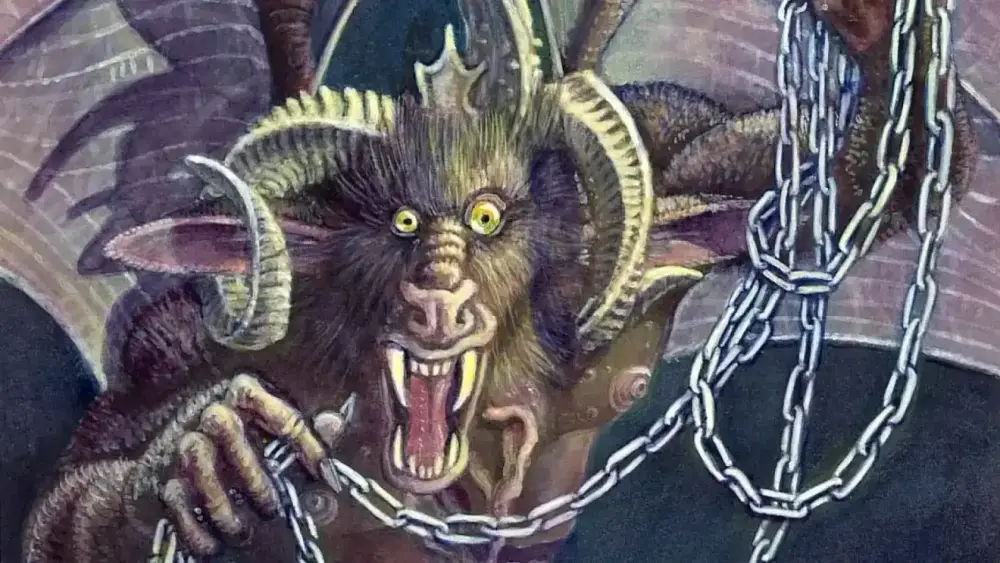
Full-art Chains proxies usually lean into the Mephistopheles theme: demons, contracts, infernal chains, shadowy figures, tortured spellbooks, and other cheerful things you might see in a basement that definitely needs better lighting.
These are popular because Chains has a strong name and mood. The original card’s flavor gives artists a lot to work with, and full-art versions can look fantastic in a sleeved Commander deck.
Best for:
Themed black decks
High-style Commander builds
Players who care more about art cohesion than old-frame accuracy
What you give up:
Rules-text space
Sometimes readability
If the full-art design still leaves the text clean and readable, great. If the text is squeezed into a decorative coffin, maybe save that one for a binder or a display card.
5. Minimalist Playtest Proxies
A minimalist Chains proxy is not trying to be pretty. It is trying to be useful.
This version may use a clean frame, large card name, simple mana cost, and oversized rules text. Some versions include a short reminder note like “does not affect the first draw in draw step” or “replacement effect, not a trigger.”
Best for:
Fast playtesting
Deck tuning
Players learning how the card works
Paper testing before ordering a polished proxy
What you give up:
Style
Flavor
Any illusion that this card came here to impress anyone
Honestly, this is a very underrated route. If you are testing whether Chains belongs in a deck, start readable. Make it beautiful later, after the card proves it deserves a slot.
The Best Proxy Route For Chains
For most players, the best Chains of Mephistopheles proxy is a readable Oracle-text version with a clean old-frame or modern-frame design.
That gives you the right balance: the card still feels like Chains, but your table does not need to stop every few minutes to decode ancient cardboard scripture. If your playgroup has never seen the card before, a flowchart version is even better.
If you are printing Chains as part of a larger Commander deck, Cube, or staples package, a print-on-demand workflow makes more sense than hunting for one random card at a time. PrintMTG is built around that kind of batch workflow, especially when you want a consistent feel across a whole stack of proxies. For general setup guidance, see PrintMTG’s guide on how to make proxy MTG cards that look clean, read well, and shuffle smoothly.
And if you are using custom art, do not ignore image quality. Chains is already hard enough to parse without fuzzy text and muddy shadows. PrintMTG’s MTG proxy image prep guide is useful if you are starting from artwork or a custom design and want it to print cleanly instead of looking like it survived a copier accident in 1998.
A Simple Checklist For Choosing A Chains Proxy
Use this quick filter before printing or ordering a Chains of Mephistopheles proxy:
Can the card name, mana cost, type line, and rules text be read at arm’s length?
Does the design clearly look like a proxy or custom playtest card?
Does it use current Oracle-style wording or a clear rules aid?
Is the artwork strong without burying the text box?
Will it look consistent with the rest of the deck once sleeved?
Does your group know what the card does before the game starts?
That last one is important. Chains is not the kind of card you want to spring on a table like a haunted jack-in-the-box. A quick explanation before the game saves everyone time.
How To Explain Chains At The Table
Here is the short version you can use before playing it:
“Chains changes most extra draws. The first card you draw in your draw step is normal. Other draws make you discard first. If you discard, you draw. If you cannot discard, you mill instead.”
That is not a complete judge-level lecture, but it is enough for most casual games to start cleanly.
Here is the slightly more precise version:
“Chains is a replacement effect. It does not trigger, and it does not loop with itself. It changes eligible draw events before they happen.”
That second sentence matters because a lot of Chains confusion comes from players thinking the replacement draw somehow gets replaced again by the same Chains. It does not. Magic’s replacement effect rules stop that nonsense, because even the rules engine has limits.
So, Are Chains Proxies Worth It?
Yes, Chains of Mephistopheles proxies are absolutely worth considering for casual play, Cube, and deck testing.
The original card is expensive enough that most players are not going to buy one casually, and the rules text is complicated enough that a well-designed proxy can actually improve the play experience. That is the rare proxy case where you are not only saving money, you may also be saving your pod from a 12-minute argument about whether everyone has accidentally milled the wrong number of cards.
For most players, pick a clean Oracle-text proxy. If your group is new to the card, pick a flowchart version. If your deck has a strong visual theme, go full-art, but keep the rules text readable. The card is already Chains of Mephistopheles. It does not need extra help being difficult.
FAQs
What Is The Most Popular Type Of Chains Of Mephistopheles Proxy?
The most useful popular version is a modern Oracle-text proxy because it makes the card easier to understand during actual gameplay. Flowchart versions are also popular because Chains has one of the most confusing draw-replacement effects in Magic.
Why Do Players Proxy Chains Of Mephistopheles?
Players proxy Chains because the original Legends card is expensive, hard to find, and mechanically unique. A proxy lets players test the card in casual Commander, Cube, or playtest decks without buying a high-value original.
Is A Flowchart Chains Proxy Better Than A Normal Text Proxy?
For teaching or casual tables unfamiliar with the card, yes. A flowchart proxy can reduce confusion. For experienced groups, a clean Oracle-text version usually feels more like a normal Magic card.
What Should A Good Chains Proxy Include?
A good Chains proxy should include the card name, mana cost, type line, readable rules text, and a clear visual indication that it is a proxy. If the design uses custom art, the text box should still be easy to read.
Should I Use Original-Style Art Or Custom Art?
Use original-style art if you want the retro Legends feel. Use custom art if your deck has a theme or you want the card to stand out. Either way, prioritize readability over decoration. Chains is not the place to make the text box microscopic for “aesthetic reasons,” unless your aesthetic is suffering.