
TLDR
Use opaque sleeves for the lowest-drama table experience.
Mixed decks feel “off” when thickness and stiffness vary card to card.
The cleanest solutions are either uniform printed proxies or a fully backed proxy deck.
Tournament reminder: sanctioned play expects authentic cards, with very narrow judge-issued proxy exceptions.
This post is about MTG sleeves, backing cards, and shuffle feel, because nothing kills the vibe like a deck that clumps, catches, or has that one card you can spot from orbit.
And yes, sleeves matter. They’re not just protection. They’re also the great equalizer.
First, a quick reality check about sanctioned play
If tournaments come up: sanctioned events require genuine cards, and players can’t bring their own proxies. Judges can issue proxies in narrow cases for damaged cards during the event. That’s not what most people mean by “proxies.” This is mostly a casual-play topic. Great. Casual play is where most Magic actually happens.
Why mixed decks feel inconsistent
A deck feels consistent when every card:
has similar thickness,
has similar surface friction in sleeves,
and stacks evenly.
When you mix:
real cards,
thin paper printouts,
cardstock home prints,
different sleeve types,
…you get uneven stiffness and drag. Your hands notice it even if you don’t want them to.
The three most common setups (and what you give up)
Setup 1: Opaque sleeves + professionally printed proxies
This is the cleanest “shuffle feel” result when you’re proxying a meaningful chunk of a deck.
Pros:
consistent thickness and stiffness
consistent cuts and corners
lowest friction to play
Cons:
costs more than paper
If you want the “what PrintMTG aims for” version of this:
Setup 2: A fully backed paper proxy deck (uniform method)
This is the classic budget approach:
print card fronts on paper,
put each paper front in front of a donor card (often basic lands),
sleeve the whole deck.
Pros:
cheap
consistent thickness across the deck (because every sleeve has a donor card)
Cons:
the deck is thicker
cutting quality matters a lot
you still need opaque sleeves for best results
Key rule: if you back proxies with donor cards, do it uniformly. Mixing “some backed, some not” is how you create marked-feel differences.
Setup 3: Mixed real cards + a few paper overlays
This is what most people try first, and it’s the most likely to feel inconsistent.
Pros:
quick for “I just need 6 cards”
Cons:
uneven thickness can be noticeable
shuffle feel varies
edges of paper can catch inside sleeves over time
If you only need a few cards, consider printing those proxies on heavier stock instead of thin paper.
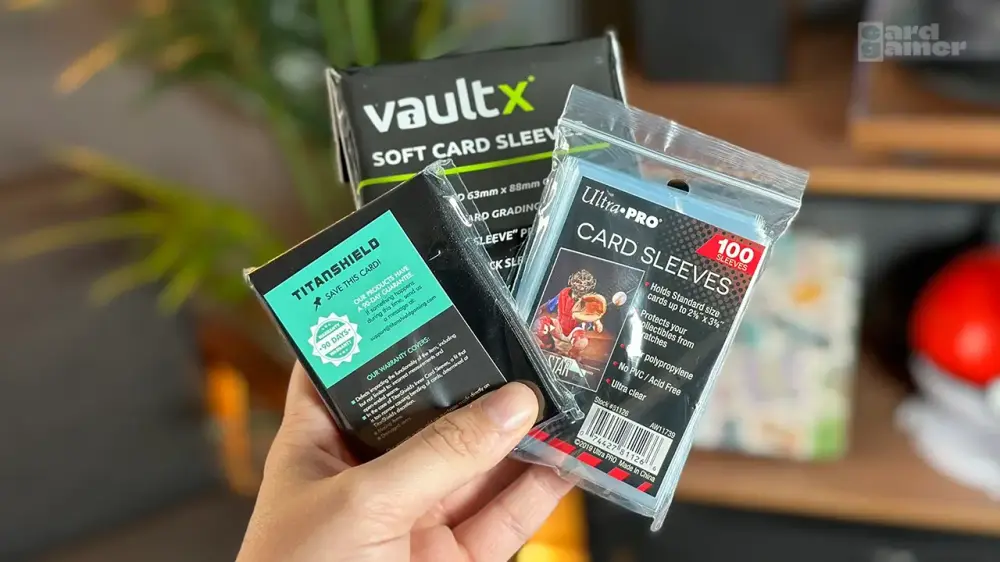
Sleeve choices that matter (without naming brands)
Opaque backs reduce problems
Opaque sleeves:
hide minor back differences,
reduce “marked card” concerns in general play,
and help double-faced cards behave normally.
Also, official tournament policy specifically calls out sleeve uniformity and opacity expectations in certain cases (like double-faced cards). That’s a good hint for casual play too: opacity helps.
Matte vs glossy
Matte sleeves often shuffle smoother and glare less.
Glossy sleeves can feel stickier or clump depending on humidity and wear.
Replace sleeves when they get worn
Worn sleeves create “marked” feel faster than most proxy differences do.
“Backing cards” choice: what works best?
If you’re doing a fully backed proxy deck:
use the same type of donor card for the whole deck (basic lands are common),
use the same sleeve type for every card,
avoid mixing donor card thicknesses.
The goal is boring consistency. Boring is good here.
Quick checklist for consistent shuffle feel
One sleeve type for the whole deck
Opaque backs if possible
One proxy construction method (don’t mix paper overlays with thick cardstock proxies in the same deck)
Consistent cuts and corners (corner rounding helps)
Test shuffle after sleeving 10 cards, not after 100
FAQs
Do I need opaque sleeves for proxies?
For casual play, it’s the simplest way to keep things consistent and avoid table confusion. It also helps with double-faced cards.
What’s the best way to proxy just a few cards without ruining shuffle feel?
Use higher-quality proxies that match thickness better, or proxy a larger chunk of the deck with a consistent method.
Why does my deck “clump” after I add proxies?
Usually sleeve friction differences (matte vs glossy, new vs worn) or uneven thickness.
Are paper proxies backed by real cards “marked”?
In casual play, it depends on how uniform your deck is. In sanctioned play, proxies have strict rules and you can’t bring your own.
What’s the cleanest overall method?
Opaque sleeves plus consistently printed proxies, or a fully backed proxy deck where every sleeve has the same structure.